Things to do in Garachico, Tenerife: natural pools, the old town and the best ice cream
What to do in Garachico, the prettiest town in northern Tenerife: the natural pools of El Caletón, the old town, free parking and the best ice cream.
 Miriam13 min readVerified · August 2026
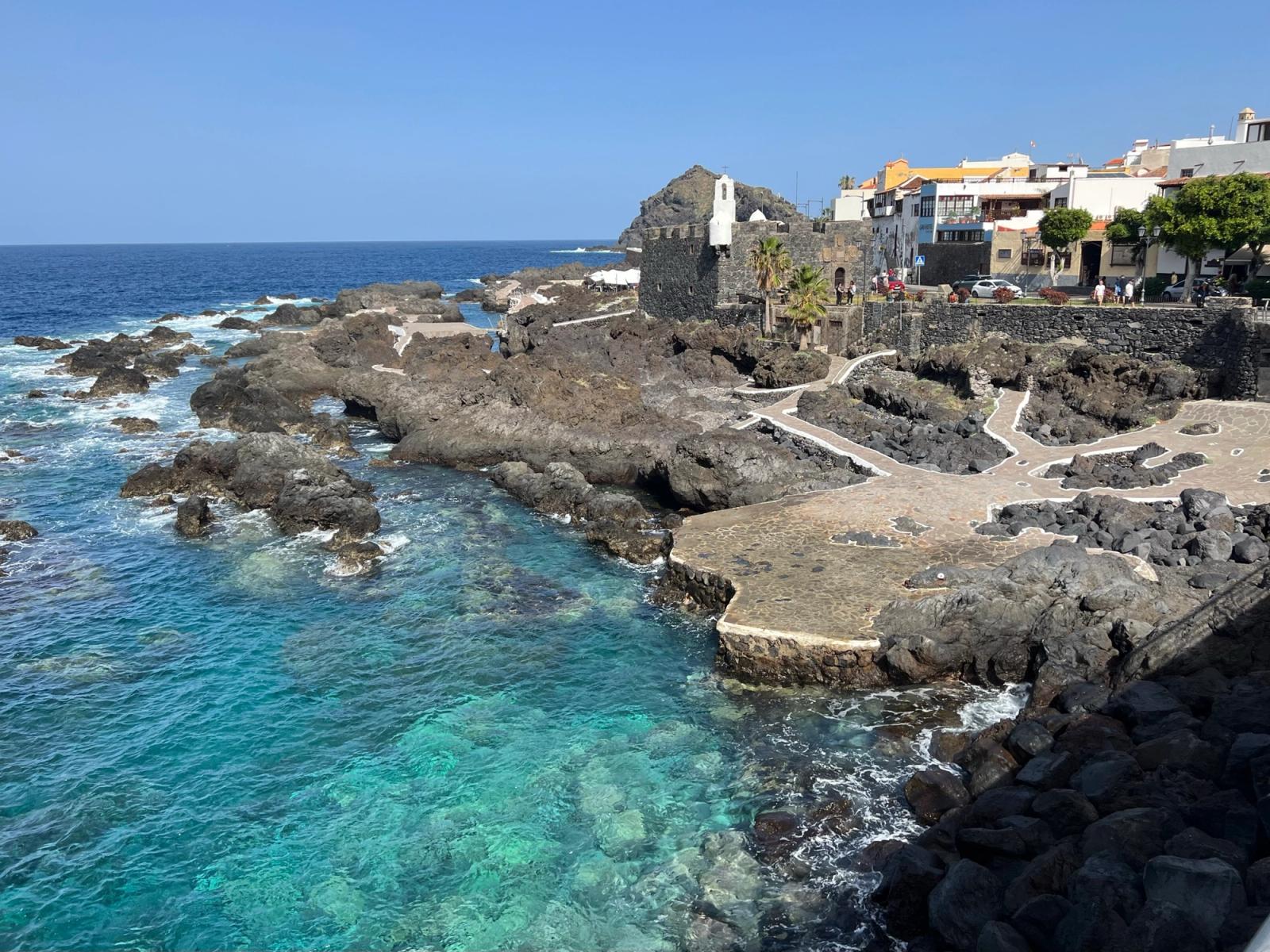
Garachico is one of the prettiest towns in Tenerife. Grand old houses, cobbled streets, a square with its bandstand café, and those famous natural pools where the sea slips in between the lava.
We live very close to Garachico, so we come here often. An ice cream, a walk along the harbour or a dip in El Caletón are some of our favourite plans. So let me tell you what to see in Garachico, where to park, where to find the best ice cream and, of course, the places you have to visit if you come to this corner of northern Tenerife.
If you book through our link it costs you exactly the same, and it helps us keep the blog going. Thank you.
A bit of history: the volcano that changed Garachico's future
Did you know that for more than a century Garachico was the most important port in Tenerife? The island's wines sailed from here to Europe and the Americas, and wealthy merchants settled around the harbour and built the grand houses we can still see today.
Everything changed in 1706, when the Trevejo volcano, also known as Montaña Negra, erupted. The lava came down the hillside, reached the sea and buried Garachico's old port, changing the town's future for ever.
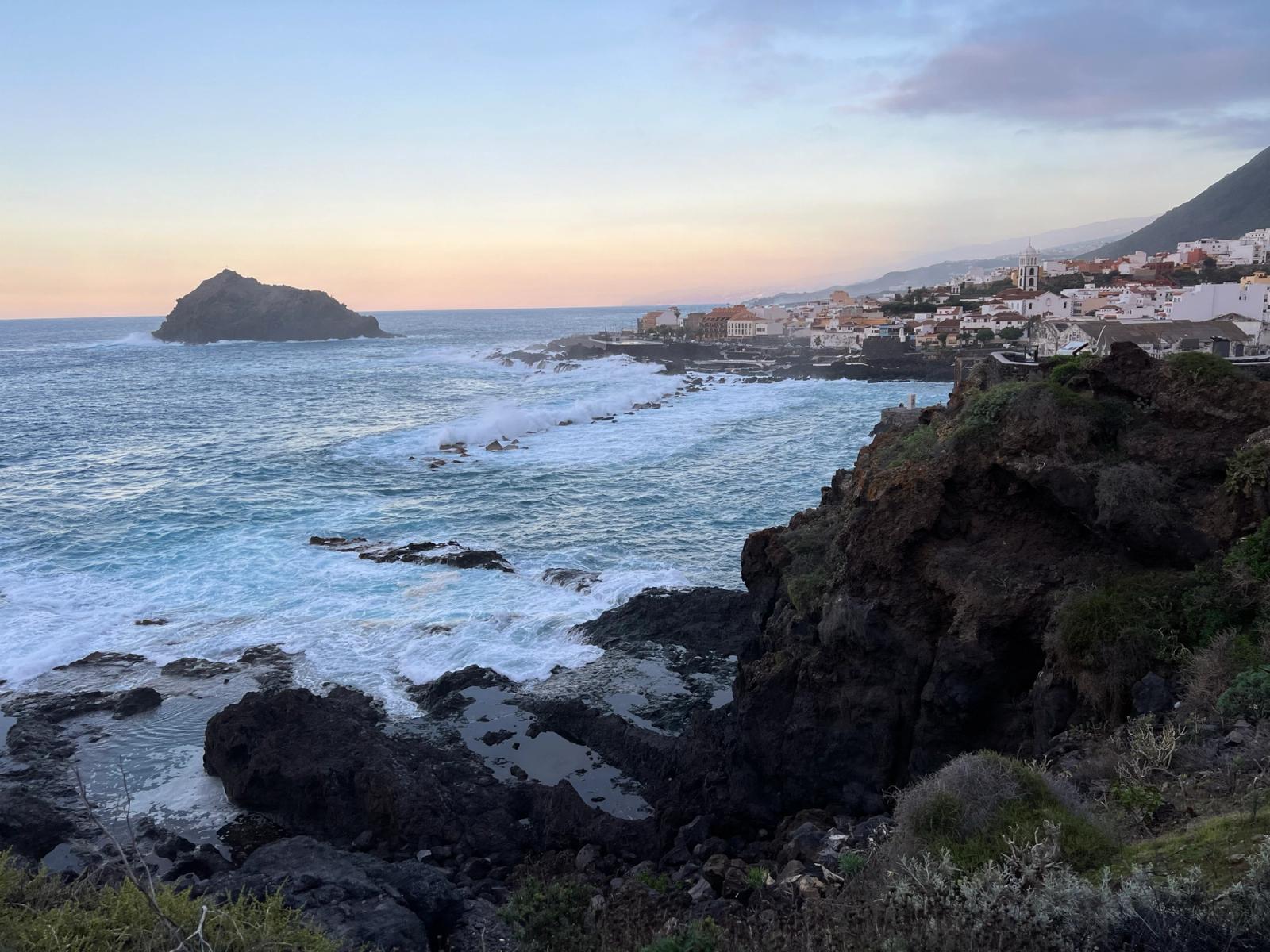
But that tragedy also left behind one of its greatest attractions today, because when the lava met the sea it created El Caletón, Garachico's famous natural pools, one of the most popular places for a swim in Tenerife.
And as trade moved to other ports, Garachico slowly lost its importance and was left a little to one side of the island's development. But perhaps that is exactly what allowed it to keep so much of its charm, and that air of a real, lived-in town it still has today.
What to see and do in Garachico


Wander the old town and the Plaza de la Libertad
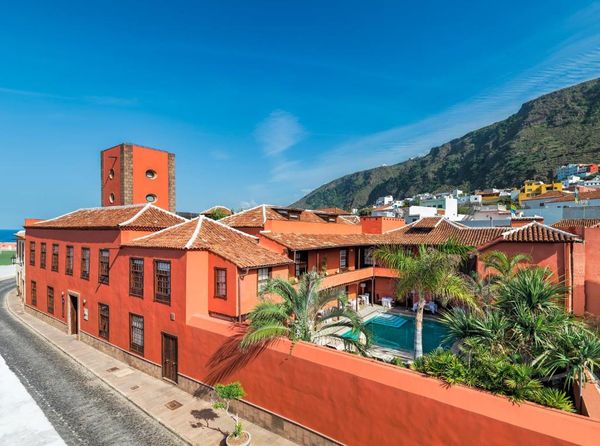
Start at the Plaza de la Libertad, the heart of Garachico. Around it you have the town hall, the Casa del Marqués de la Quinta Roja (now a rural hotel), the former Convento de San Francisco, today the Casa de la Cultura with a small museum, and the Palacio de los Condes de La Gomera.
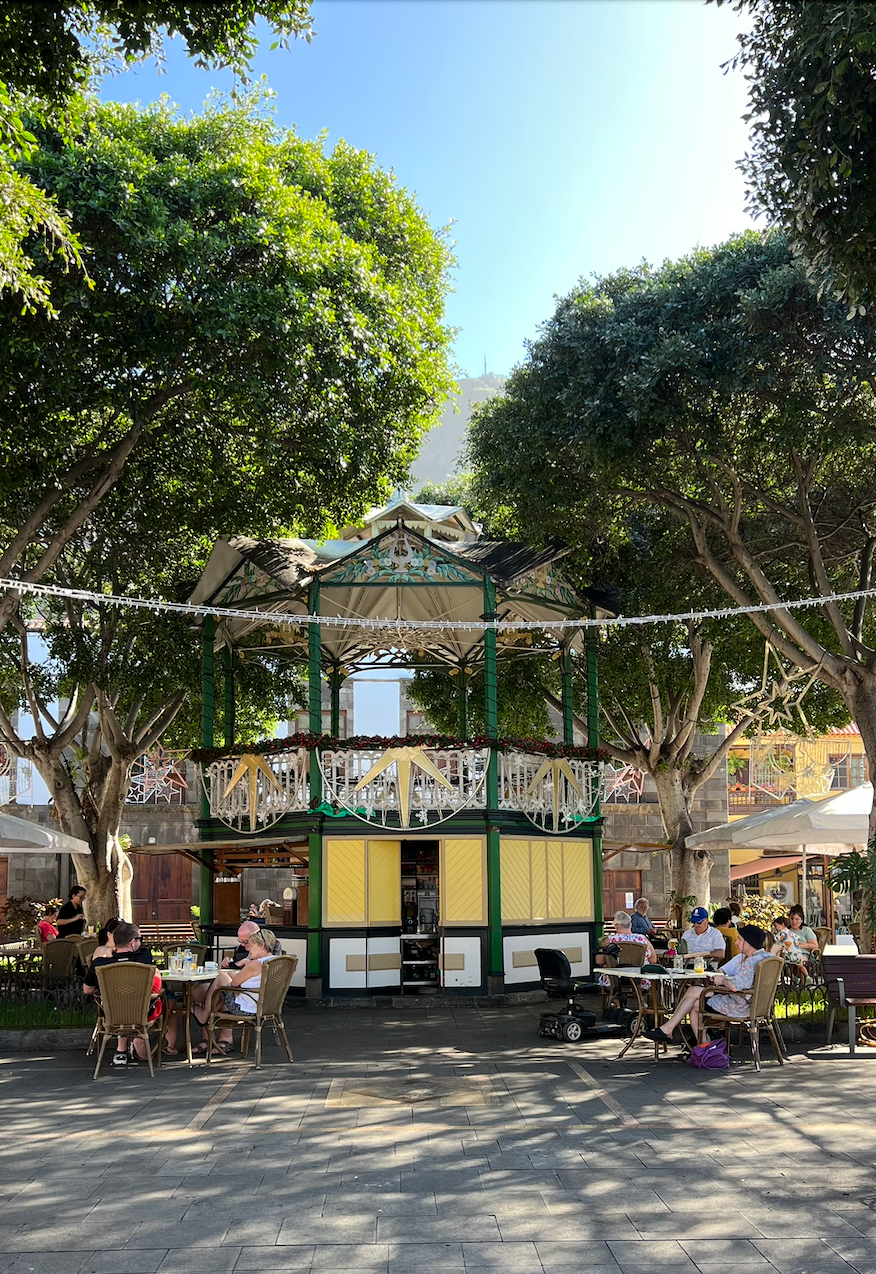
Sit for a while on a bench or on the terrace of the little bandstand café and simply watch the day go by in Garachico.
From there you can carry on walking up to the church of Santa Ana, the most important in town, rebuilt after the 1706 eruption. And in between, let the cobbled streets take you: old houses with wooden balconies, courtyards you half glimpse through a door left ajar, and cats sunning themselves. The best thing about Garachico is that you can walk all of it, with no itinerary at all.


If you would rather hear the town's story from a guide, you can also do a free walking tour of Garachico's old town, which lasts about two hours and starts in the Plaza de la Libertad.
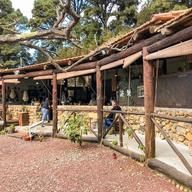
Coffee at the bandstand café on the square
For me, these are the moments I enjoy most when I travel. Sitting down with no rush, having something, and watching the life of the people who actually live there.
In Garachico, do it at the little café on the Plaza de la Libertad. Order a barraquito (our layered Canarian coffee with condensed milk) and stay a while. The older folk on the benches, children running about, someone stopping to greet a neighbour, and birdsong in the background.
This probably does not appear in many guides, but for me it is one of the best things to do in Garachico. Time seems to go more slowly here, and that is precisely part of the town's charm.
La Puerta de Tierra and its garden
La Puerta de Tierra is the stone gateway through which you entered the old port, the one the volcano wiped off the map. Today it sits inside a small, leafy garden with exotic plants and an old lagar (an enormous wooden wine press, from the San Juan Degollado estate) that children always find fascinating. It is a good spot to sit in the shade and rest for a bit.
I love coming to this corner with the girls, reading the information boards together and getting them to imagine what La Puerta de Tierra was like back then, with the sea reaching right up to it and all the bustle of sailors and merchants.


Swimming at El Caletón
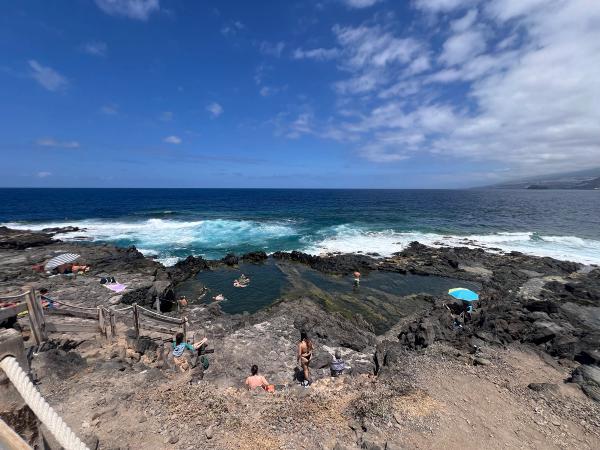
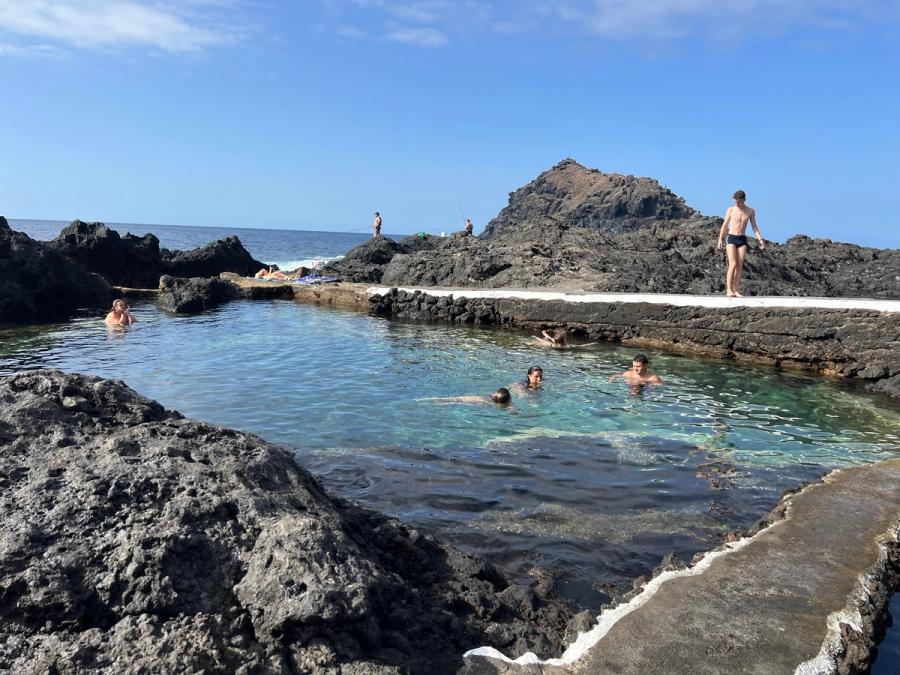
El Caletón is probably the best-known spot in Garachico and the reason most people visit the town. It is a series of natural pools formed by the lava, with clear water, steps down into the sea and flat areas to lie in the sun.

If you want somewhere quieter and more local, in Los Silos, ten minutes away, you have the Charco de los Chochos, a smaller natural pool where there are usually fewer people.
The Castillo de San Miguel
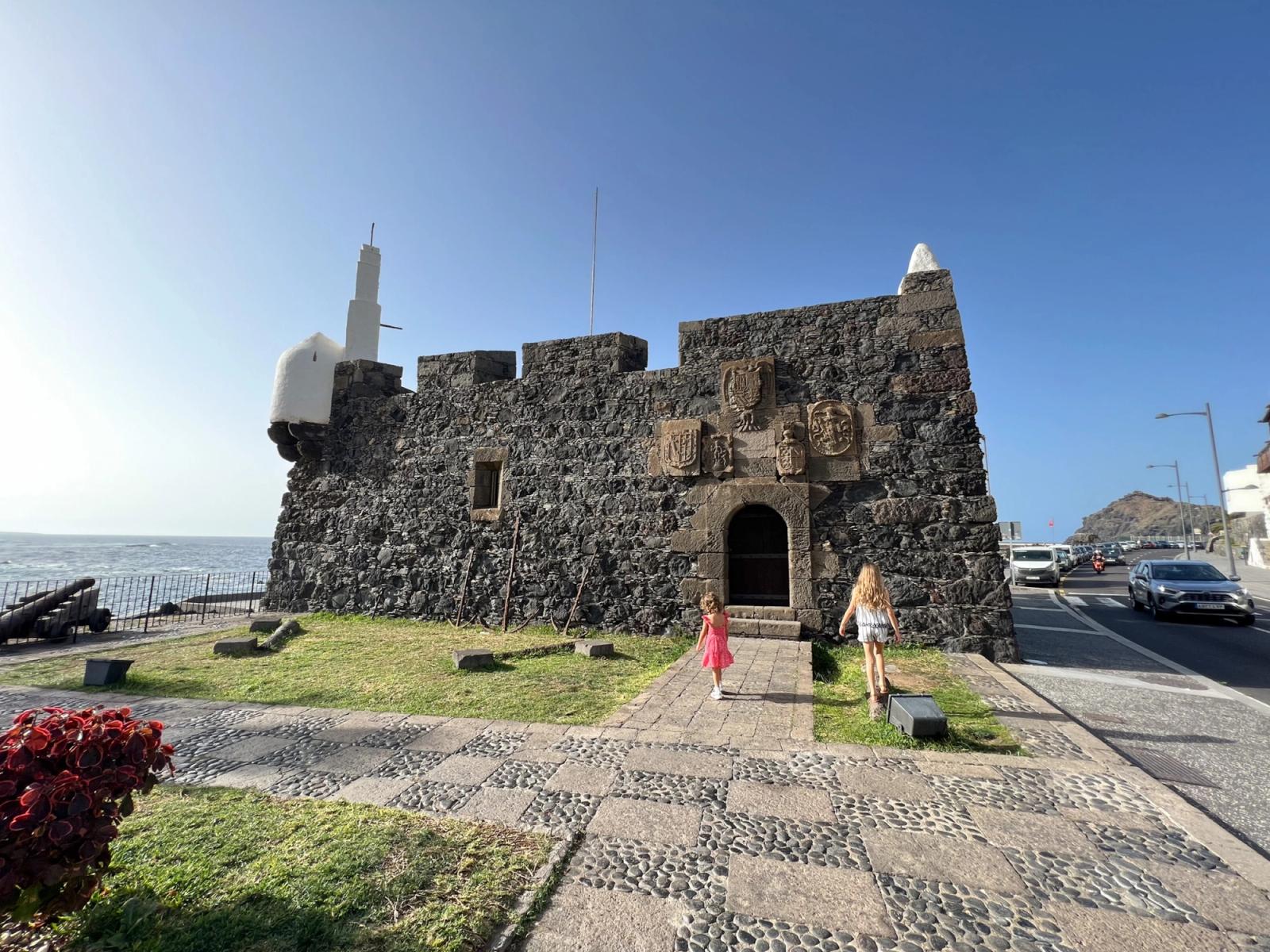
Right next to El Caletón is the Castillo de San Miguel, a small 16th-century fort built to defend the port from pirates, which survived the eruption almost untouched. Inside there are a couple of exhibition rooms, and entry costs around 2 € (it usually opens Monday to Saturday mornings. Do check at the tourist office, because the hours change). The best part, without a doubt, is the view of the roque and the pools from the top.
The seafront promenade, a swim at Playa del Muelle and the Fisherwoman
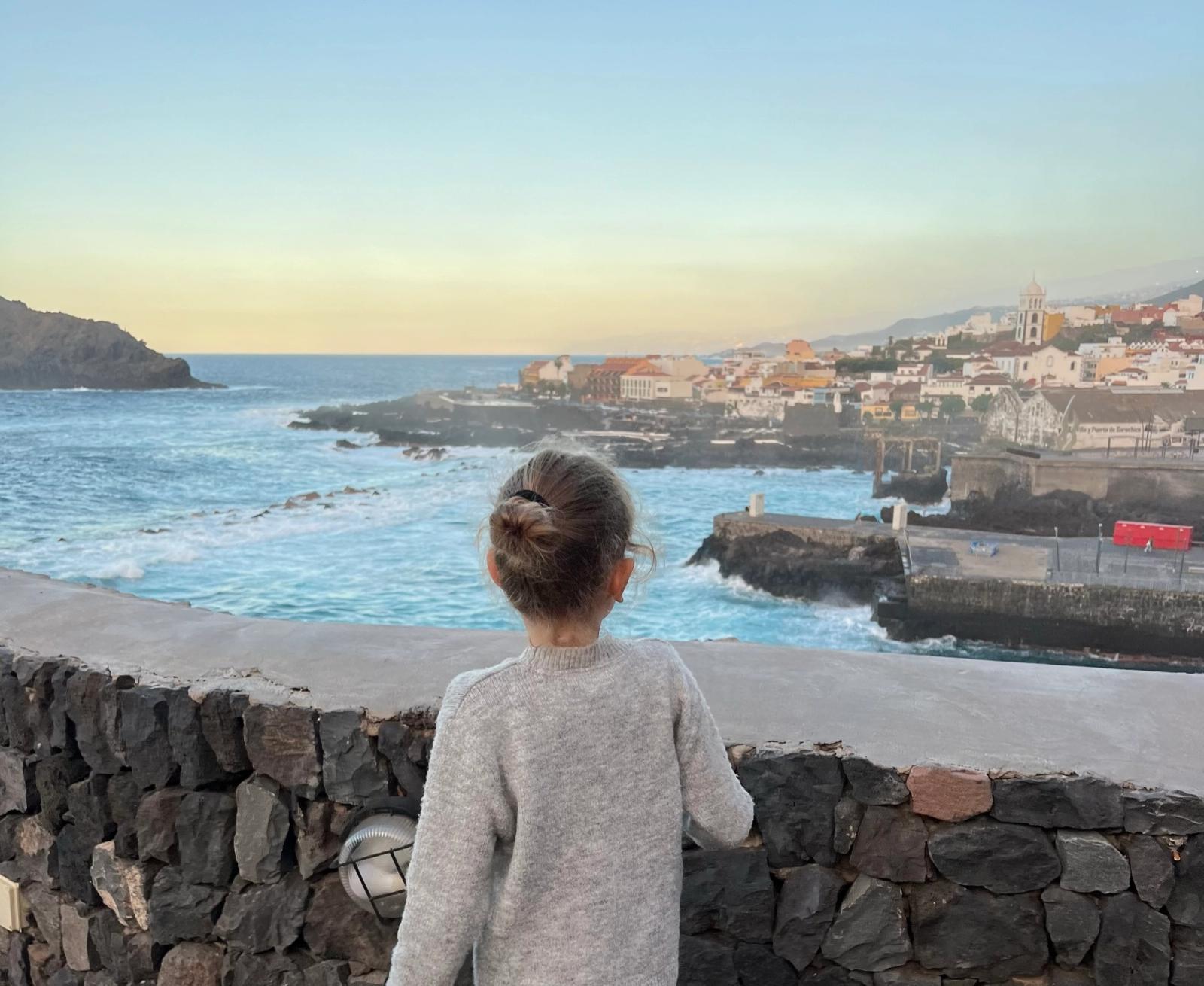
The promenade starts before you reach El Caletón and runs along much of Garachico's seafront to the harbour. It is a lovely walk, with the Roque de Garachico taking centre stage and the sea alongside you the whole way. One thing many people do not know is that in Garachico you can swim at the beach too, not only in El Caletón.
Playa del Muelle is a little beach of black sand and pebbles, tucked against the fishermen's old harbour and sheltered inside the old bay, so the water is usually calm. With small children we prefer it to the pools on busy days.
By the way, if you come at Christmas, look carefully towards the rocks: they set up a lovely nativity scene there.


On the harbour, facing the beach and next to the tourist information office, stands the Monument to the Fisherwoman. It is a contemporary sculpture honouring the part women played in the town's seafaring tradition. From the breakwater you also get the best view of the whole town with the mountain behind it.
If you see boats out working, stop for a moment and watch. Garachico is still a fishing town, and that is part of its charm too.
The door to nowhere, Kan Yasuda's sculpture
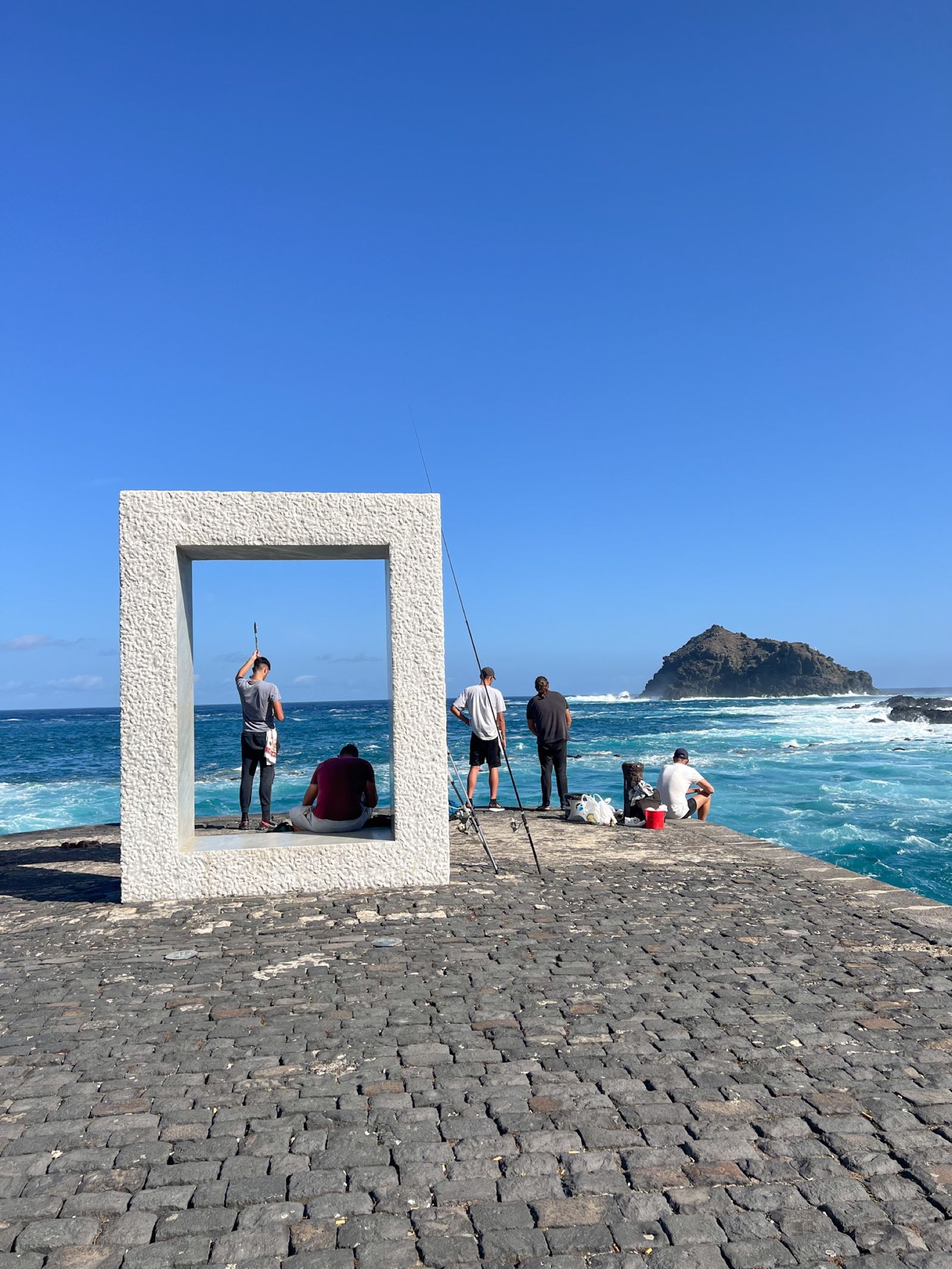
By the harbour, facing the sea, there is a sculpture that stops everyone in their tracks: an enormous, smooth white marble doorway with nothing behind it but the Atlantic. It is Tensei Tenmoku (the «door without a door») by the Japanese sculptor Kan Yasuda, in Carrara marble, installed here in 2000. The girls walk through it again and again as if it were a portal, and the photo from inside, with the sea framed in it, is probably the one everyone takes.
Playgrounds
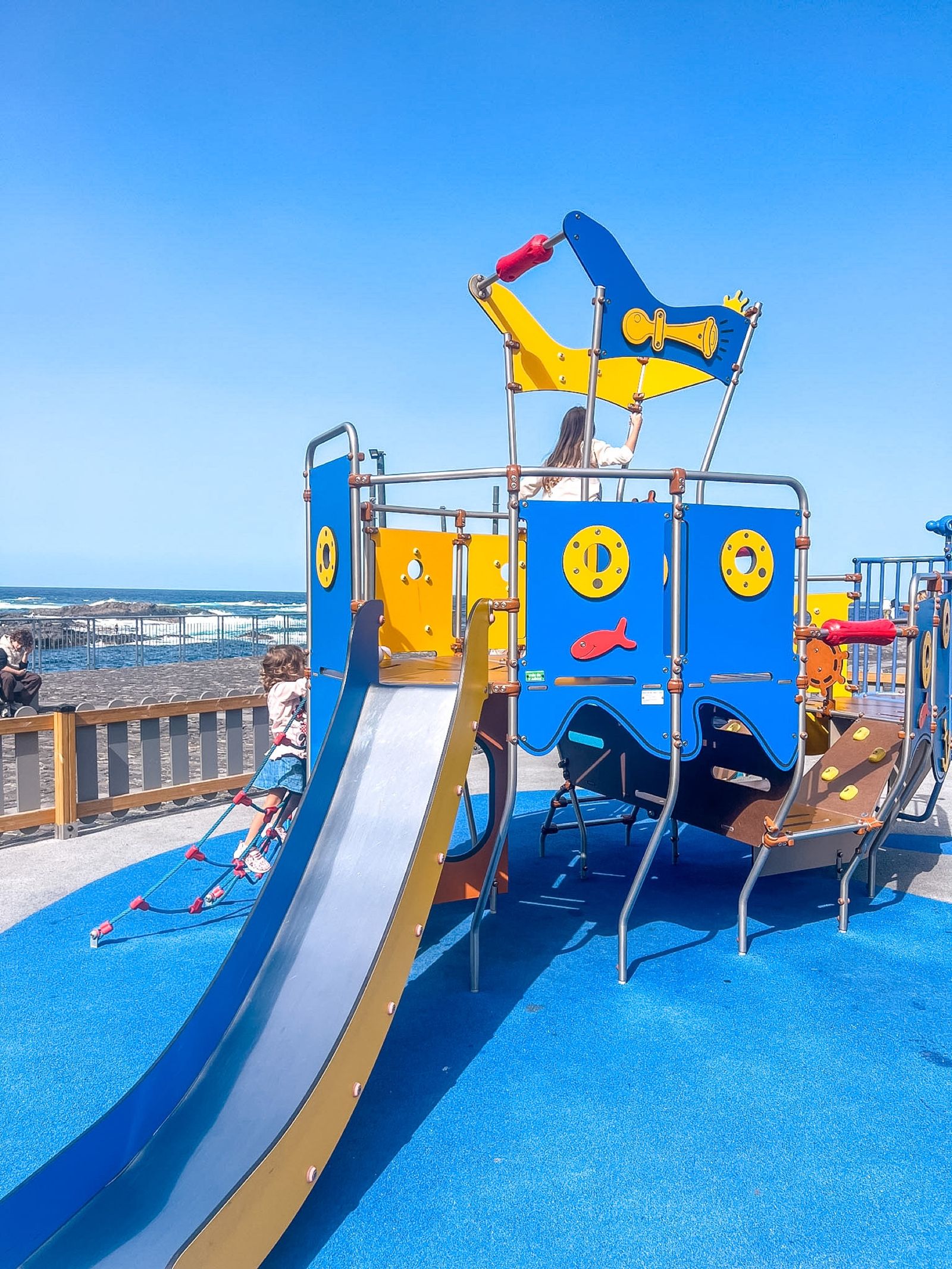
If you are visiting Garachico with children, note down these two playgrounds. One is right by El Caletón, opposite the Fragola ice cream shop, and it has a Pocoyó theme.
The other is at the old harbour, near the beach and the marble doorway. It is the one in the photo below, with a little boat and a whale, and it is our favourite. The little ones can play for a while with the sea right there beside you, and then you carry on walking.
So there you go: if you come to Garachico with children, the perfect plan is a dip in El Caletón, an ice cream and the playground. They need very little else for a wonderful afternoon.
The Ermita de San Roque and the romería
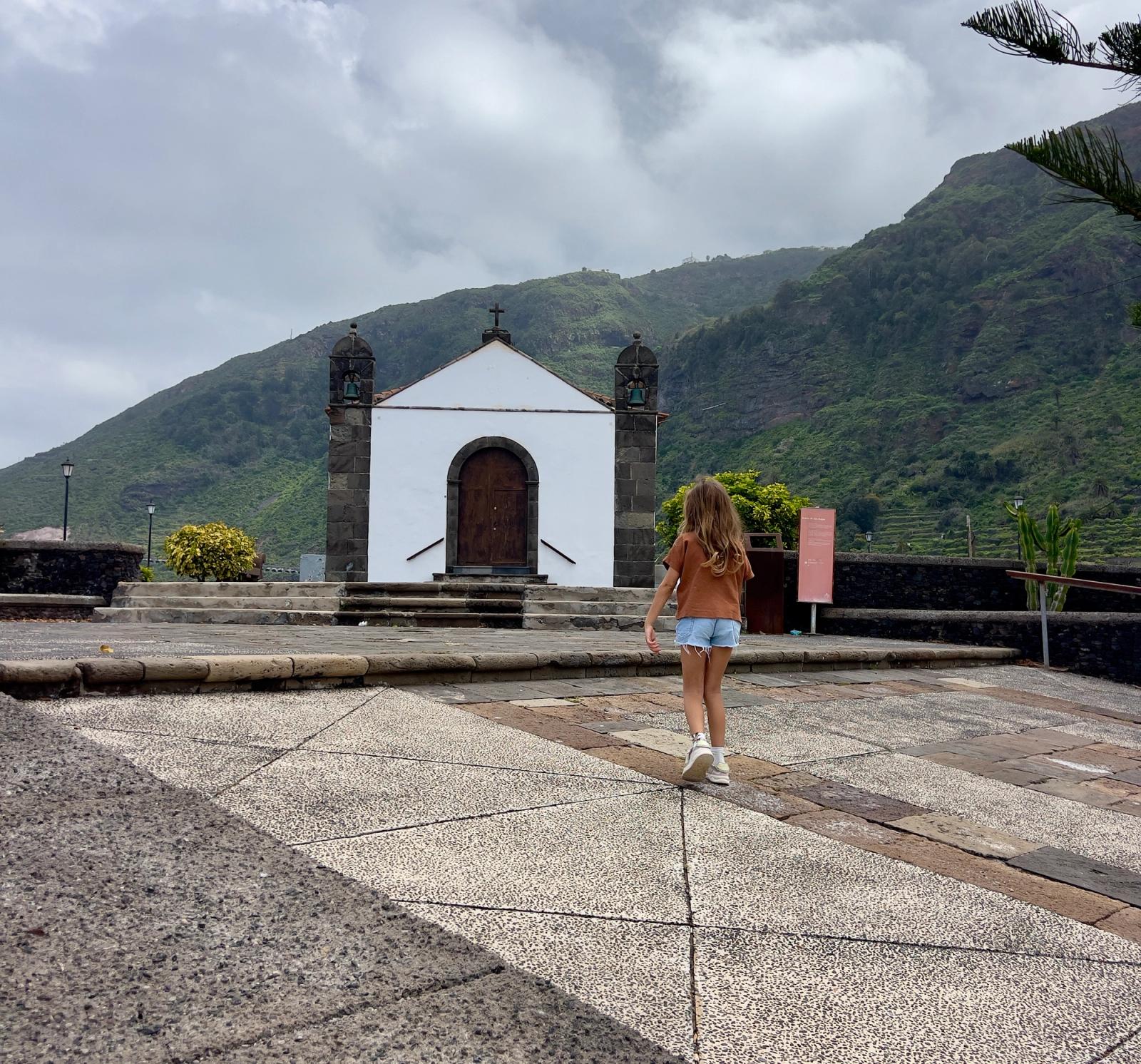
The Ermita de San Roque is the chapel of the town's patron saint, built in the early 17th century when a plague swept the island. And every 16 August Garachico celebrates the Romería de San Roque, one of the loveliest and busiest in Tenerife: ox carts, traditional dress, music and food everywhere. If your dates match, go, but go knowing that the town fills to bursting that day and parking is close to impossible.
The Wine Riot and the Monument to the Emigrant
Two stories in stone that say a lot about Garachico. The Monument to the Wine Riot, on Avenida Adolfo Suárez, is a five-metre Carrara marble figure carrying barrels, on a base of lava from the flows here; Luis Montull made it in 1996 and it remembers the day in 1666 when the growers, fed up with the English monopoly on the island's wine, stormed the port's cellars and the streets ran with wine. And the Monument to the Canarian Emigrant, by the sculptor Fernando Garciarramos and given to the town in 1990, honours the thousands of Canarians who left for the Americas when there was nothing to live on here. If you are travelling with older children, they are two good excuses to talk about history without it sounding like a lesson. And around town you will spot more, like the weathered steel woman who greets you at the roundabout on the way in.

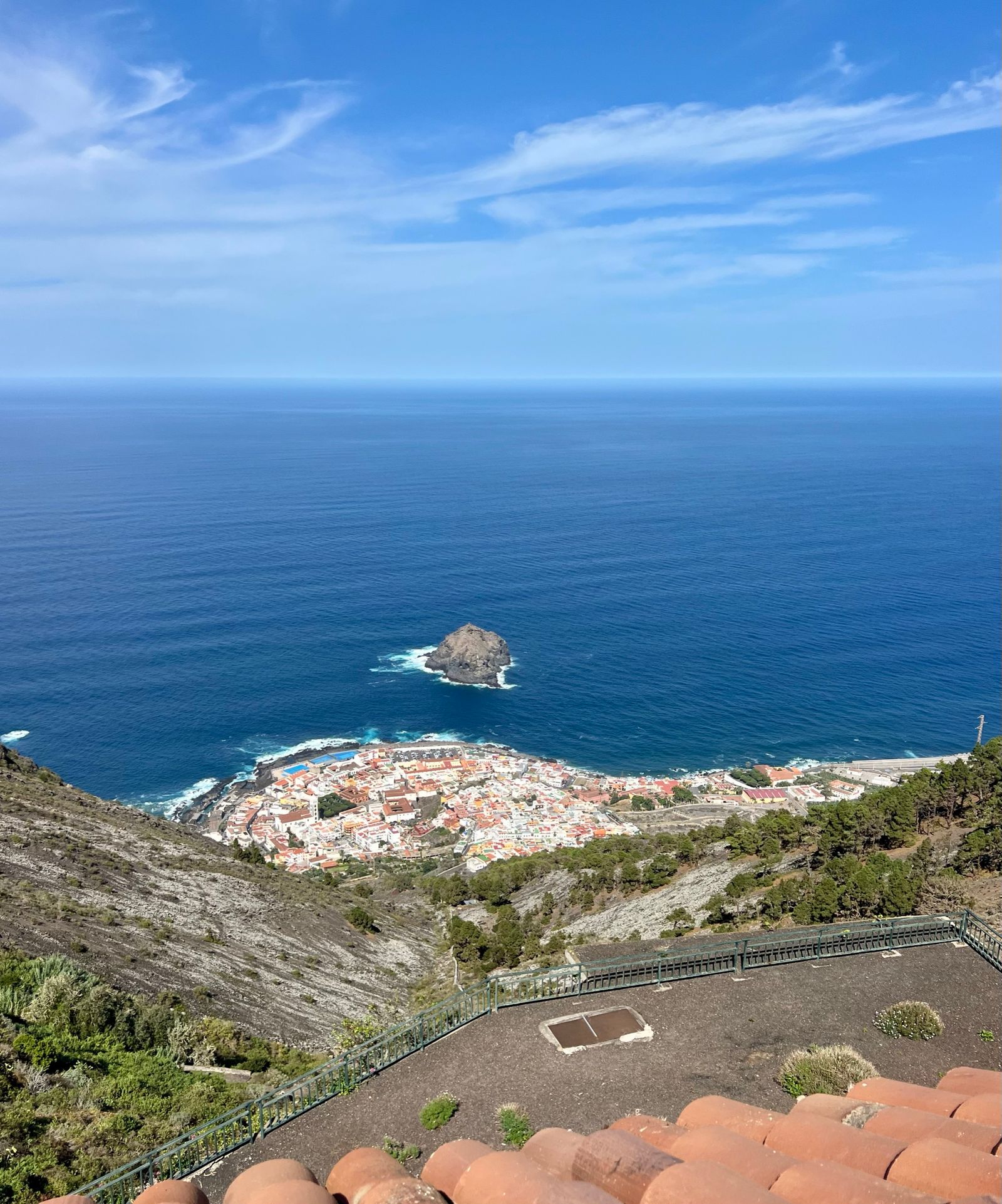
The Mirador de Garachico
For the postcard shot you have to go up. The Mirador de Garachico is on the road climbing towards El Tanque, and from there you see the whole town below, the roque and the sea. It is a compulsory stop on the way in or out, especially in afternoon light. There is very little parking, so be patient.

Where to get ice cream in Garachico
I'll confess: we often come to Garachico just for an ice cream. There are three excellent ice cream shops, and all three face the sea.


- La Alsaciana (Avenida República de Venezuela, 17). Ice cream shop and patisserie. This is where I love coming for coffee and Sachertorte. I would go so far as to say it is the best Sachertorte you will find in Tenerife. Artisan ice creams, cakes and a small terrace.
- Heladería El Abuelo (Avenida República de Venezuela, 29). The old faithful, a traditional Canarian ice cream shop, a family business on the front line of the old harbour, right opposite the fisherwoman statue. Classic flavours, well made. It has a small terrace too.
- Fragola (Avenida Tomé Cano, 10A). Italian artisan gelato and, according to several rankings, one of the best in the Canaries. Closed on Mondays.
If you want a proper meal in Garachico, the town has several restaurants specialising in fresh fish and Canarian cooking.
Visit Garachico with respect
I did wonder whether to include this section, but I think it is needed. Garachico is a small town where people live, not a stage set for tourists.
In recent years it has become very fashionable, and there are days when the old town can feel like a theme park. There is nothing wrong with coming to enjoy it, quite the opposite, but let's do it with a little common sense and respect for the people who live here.
- Park properly, always in the marked areas. Never in front of somebody's door or double-parked.
- Keep the noise down in the narrow streets, especially at midday and at night.
- Take your rubbish with you from El Caletón and the promenade. If you cannot find a bin, it comes home with you.
- Spend in local businesses: have a coffee on the square, buy an ice cream, go into a small shop or eat in one of the town's restaurants. Your visit can also help the local economy benefit from tourism.
- And if you are lucky enough to be there for a romería, a procession or a fiesta, join in and enjoy it. People will be delighted to share their traditions with you, but remember you are stepping into a local celebration: respect the rules and the culture of the island.


Where to park in Garachico (and how to get there)
Parking in Garachico can be tricky, because the old town is small and the streets are narrow. My advice is not to try driving into the centre. You have free parking in these areas, all a few minutes' walk from the square:
- By the harbour, at the western entrance to the town, there is a large free car park with a tourist information point next to it (here it is on Google Maps).
- At the old football ground, now a free public car park, a little further inland.
- At the far end of the promenade, next to El Caletón, with roadside spaces and no meters, plus another free open area.
Getting there: by car, on the TF-42 from Icod de los Vinos (about 10 minutes) or along the coast from Los Silos. From the south allow around an hour and a half. By bus, the Titsa 363 links Puerto de la Cruz, Icod, Garachico, Los Silos and Buenavista. And if you are here without a car and want to see the area in a day, you can hire a car or join an organised day trip taking in Teide, Icod, Garachico and Masca, which picks up in both the north and the south.
How long do you need in Garachico?
You already know I am one of those who would rather stay in the less touristy places and enjoy somewhere real, so this really depends on what you are after.
If you ask me how long you need to see Garachico, I would say half a day is enough: a walk through the old town, the square, the castle, La Puerta de Tierra and the promenade. If you also want a swim in El Caletón, give it the whole day.
Now, if what you want is to really enjoy Garachico and switch off, then I would stay two or three days.
Staying here also lets you use Garachico as a base for exploring the Isla Baja, one of my favourite areas in Tenerife, and for day trips to places like Los Silos, Buenavista del Norte or the Teno Rural Park without driving up and back from the south of the island.
Is Garachico worth visiting? Our verdict
Yes, without a shadow of a doubt. If you are staying in the north of Tenerife it is a compulsory stop, and if you are in the south it is worth the hour and a half in the car. Do combine it, though, with a visit to Icod de los Vinos for the Drago Milenario and the Cueva del Viento, or with a route around the Isla Baja.
Pros
- The prettiest old town in Tenerife, on foot and in no time
- El Caletón: free natural pools right by the promenade
- Three excellent ice cream shops (and the Sachertorte at La Alsaciana)
- Free parking in several areas
Cons
- It gets very busy at weekends and in summer
- Parking near the square is close to impossible
- El Caletón closes when the sea is rough
- It is small: half a day is enough if you are not swimming
FAQ
What is there to see in Garachico in a day?
The Plaza de la Libertad with its bandstand café, the old town, the church of Santa Ana, La Puerta de Tierra and its garden, El Caletón with the Roque in front, the Castillo de San Miguel, the walk out to the harbour with Kan Yasuda's marble doorway and, on the way in or out, the Mirador de Garachico.
Where do you park in Garachico?
Free by the harbour (western entrance), at the old football ground or at the far end of the promenade next to El Caletón. Do not try to drive into the old town; you can walk all of it.
Can you swim at El Caletón (and at the beach)?
Yes, and it is free, but only when the sea is calm: with a big swell it is dangerous and access is closed. There is no lifeguard, so with children always keep an adult beside them, and bring water shoes. If the sea is rough or the pools are packed, Playa del Muelle, sheltered next to the old harbour, is the calm alternative.
How much does the Castillo de San Miguel cost?
Entry is around 2 €. It usually opens Monday to Saturday mornings, but the hours change: check at the tourist office by the harbour before you go.
Which is the best ice cream shop in Garachico?
We have three favourites, all three on the seafront avenue: La Alsaciana (and its Sachertorte), Heladería El Abuelo (the traditional Canarian one) and Fragola (Italian artisan gelato, award-winning; closed on Mondays).
How do you get to Garachico by bus?
On the Titsa 363, which links Puerto de la Cruz, Icod de los Vinos, Garachico, Los Silos and Buenavista del Norte.
When is the Garachico romería?
The Romería de San Roque is held every 16 August. It is beautiful, but the town fills up that day and parking is close to impossible: go early or take the bus.